
“That she had sold them and that she had received the money for them.” That one sentence, spoken by the witness standing at the front of the room, moves the whole hearing onto new ground: away from which furniture went missing, and towards who had any right to sell it.
The question that produced it was almost offhand — “What did she say about them?” — and the “them” was a set of couches. The defendant in the case is Maria Mohd, described as Chris’s ex-girlfriend. Everything that follows in this stretch of the hearing comes back to that pair of facts: a sale happened, and someone was paid.
The couches question, answered in a single line
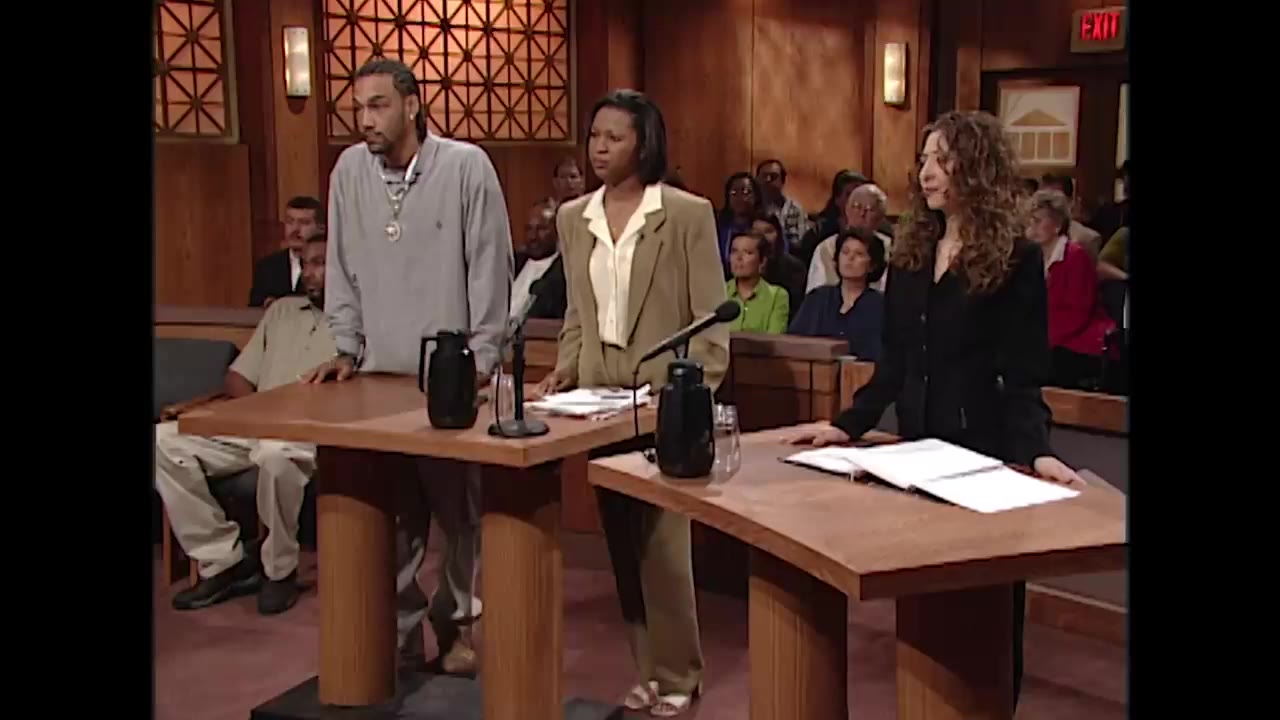
Ford, still at the front of the room, did not hedge. Asked what the defendant had said about the couches, the answer was that she had sold them and received the money for them. The bench did not let it stand on the first telling. “Is that what she told you?” came the follow-up. “That’s what she told me.” Then the harder one: “Why would she tell you that?” The reply was flat and, in its way, honest: “I don’t know why she would tell me that.”
That exchange matters because of what surrounds it. Earlier in the hearing, the plaintiffs’ side had drawn its own line through the furniture, splitting the claim in two: “I didn’t ask for bills for the three. I asked for the two for mine. I don’t care about his.” The same voice had added that one unit was not taken but sold — “Mine is the one that she sold.” By the time Ford reached the couches, the case was no longer only about three entertainment centers. It was about a pattern of sales, and about who owned the goods before they went out the door.
Why a secondhand sentence got tested twice
To a general reader, the judge’s two follow-ups can look like impatience. They are the opposite. What Ford was giving the court is hearsay in the plain sense: a statement made outside the courtroom, repeated inside it. Courts treat that kind of evidence carefully, because its weight depends entirely on the circumstances in which the original words were said — who was speaking to whom, in what setting, with what motive.
Ford supplied none of that. What Ford supplied was the remark itself, plus a clear statement of not knowing why it had been made. And Ford made no larger claim: no account of watching the couches leave the house, no claim to have handled the money, no claim to have stood in the room while the sale was agreed. The bench was not testing whether the defendant is a truthful person. It was testing how much a repeated sentence can carry when it arrives alone.

Which is the same problem the case had already run into on the entertainment centers. Asked for the bills, the plaintiffs’ side had said, “I don’t have the receipts on me,” and offered instead a spoken assurance from the store Renaissance that it would confirm a theft. Twice now the bench has asked for paper and got a sentence.
From a jail cell to a bail payment
Then the subject turned, quickly, to a man called Chris. “He went to jail for domestic violence,” is said — and then said again, as if to fix it on the record. From there the questions move to how Chris got out: a call, and a plan to post bail. “He had called me and told me that he was going to go and bail Chris out of jail,” runs the account given at the front of the room.
That is where the hearing briefly stops being orderly. “But you bailed him out?” gets an immediate “Don’t speak.” — the bench cutting in before an answer can be trampled. Then, on the record, a short admission: “I did have the money.” And a line that leaves the pronoun doing a lot of work: “She bailed him out.”

Comments 0