abc feji
Fighter Athlete inspiration Entertainment Game Technology sport
  • Fighter
  • Athlete
  • inspiration
  • Entertainment
  • Game
  • Technology
  • sport

The Man Who Climbed Da Nang's Roofs to Bring the Picture In

Posted November 1, 2026 · 10 min read

In a lane off Lê Lợi, the ladder always went up first. It was bamboo, four rungs, the feet wrapped in rag so they would not skate on a wet step, and the top leaned at a patient angle against the edge of a tiled roof. Then the aerial man climbed it, a skein of coax cable over one shoulder and a three-element aerial in his other hand — a short aluminium boom with its reflector and director already screwed down, the folded dipole waiting to be aimed. Below him, in the doorway of the house, a boy from the family stood with one hand shading his eyes and called out channel numbers.

The calling was the whole method. An aerial on a roof is a directional piece of metal: turn it a hand's width and the signal either arrives or it does not, and up on the tiles there was no instrument to say which. The instrument was inside the house, in the front room, in the dark — a colour tivi with the sound turned down and the picture stuttering between grey and grey. So the boy called numbers. One station came clean, another came doubled, a third was lost in snow. The man on the roof moved the boom a few degrees and waited for the verdict to travel up from the doorway. When the ghost slid off the faces on the screen, he stopped, lashed the pole to whatever the roof offered, and climbed down to be paid.

What the Rooftop Ăng-ten Was For

Ăng-ten is simply the Vietnamese word for antenna, borrowed long ago from the French, and a rooftop ăng-ten did one job: it caught a television signal out of the air and sent it down a length of coaxial cable to the set. In the early 1990s in Đà Nẵng, that was the only way a picture got into an ordinary house. There was no cable at the start of the decade, no satellite dish in a residential lane, no wall of videotapes in every shop. The signal was broadcast from a mast somewhere out past the built-up streets, and whether it reached a front room depended on height, aim, the quality of the wire and the weather.

The aerial itself was usually a three-element design: a horizontal boom carrying a folded dipole in the middle, a reflector behind it and a director in front. The metal elements were cut to lengths matched to the frequencies of the channels people actually watched, which is why one aerial could be excellent at one station and mediocre at another. The design is directional by nature. Pointed at the transmitter, it pulled in a strong signal; pointed twenty degrees off, it delivered a picture that softened, tore, or filled with snow.

Đà Nẵng households had a rough ladder of channels that the aerial men knew by heart. The city's own station was the easiest — close enough that a modest pole on a two-storey house would usually do. The stations from Sài Gòn were harder, and a family that wanted them needed height, a longer mast, better cable and a stretch of settled weather. What people described, though, was never the reason for any of it, only the symptoms: a second faint image sitting slightly to the right of the first, which neighbours called a ghost; a horizontal band that crawled slowly up the screen; a hiss under the dialogue that rose and fell with the wind.

Ghosting shaped the whole trade, because it came from the same signal arriving twice. Tall buildings, a hillside, a water tank — anything solid in the path could throw a copy of the broadcast back at the aerial a fraction of a second late, and the set drew both. The cure was never clean. More height helped. A better-aimed boom helped. A shorter, thicker run of cable helped. Nothing helped completely, which is why the work was done by eye and by shout rather than by measurement, and why a good aerial man was judged by how few callbacks he got.

Weather shaped the trade just as much as geometry did. A picture that was perfect in the dry heat of June could dissolve in a September downpour, and the salt air off the coast worked quietly on every connector on every roof. Heat shimmer, wet foliage, a new block of flats two streets away — all of it could undo an aim that had been perfect a year earlier. Households learned to live with a certain amount of variation, and to call someone when the variation became unbearable.
Seen from a high window in the middle of the decade, a Đà Nẵng lane looked like a reed bed. Bamboo poles rose from stair blocks, chimneys and water tanks, held upright by concrete blocks, jerry cans and sacks of sand, braced with galvanised guy wire, and every pole carried its own small metal cross. Each new tivi in the lane added another one. Nobody took the old ones down.

Colour television — tivi màu — is what changed the arithmetic of all this. The first colour sets to appear in ordinary houses were a purchase the whole family discussed, and they arrived in step with the rest of the decade's new goods. The aerial was a small part of the bill, but without it the set was furniture. The aerial man was often the first stranger invited in to look at the new screen, and he was usually given tea before he was allowed to leave.

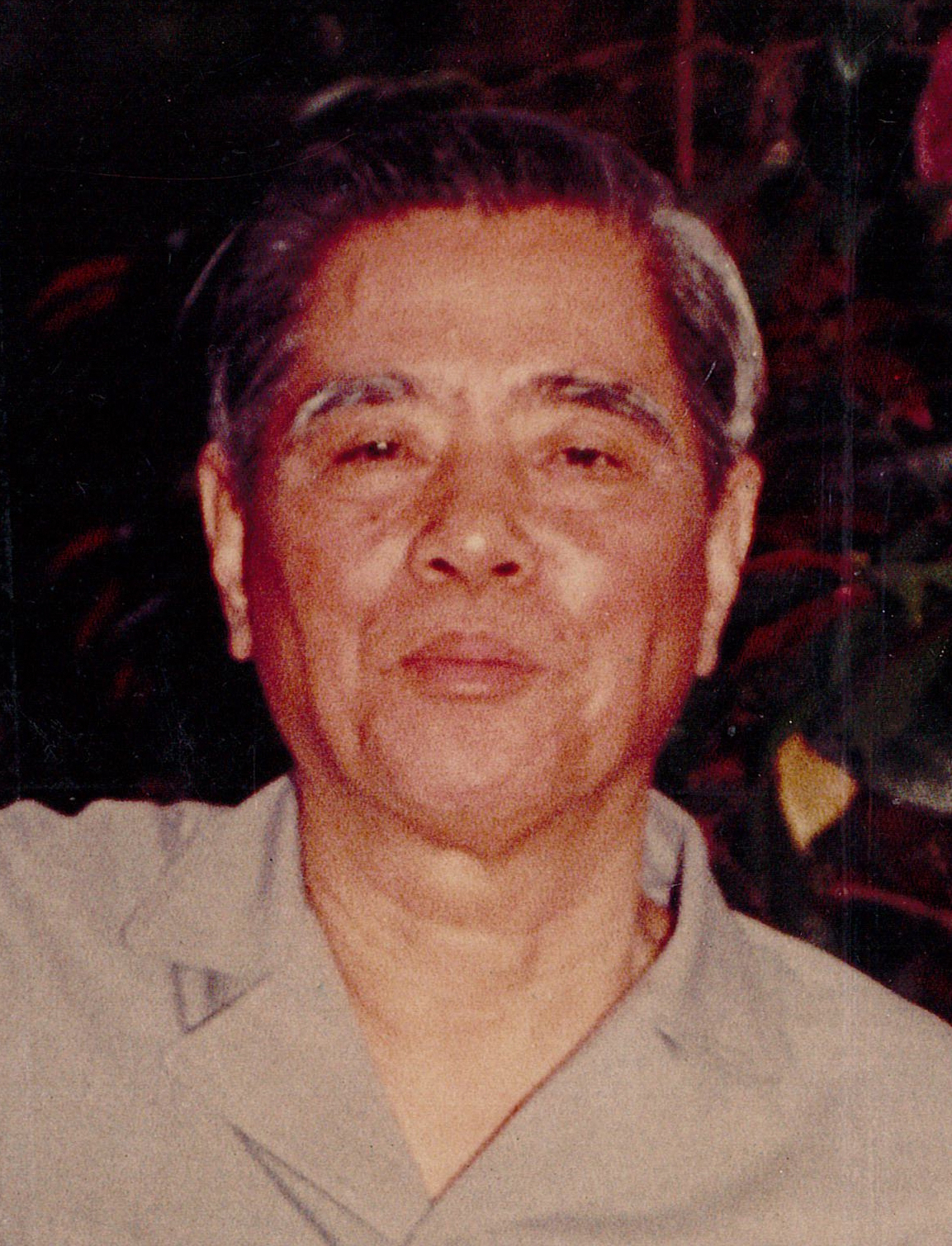
Nguyễn Văn Linh
Nguyễn Văn Linh (Photo: CalCoWSpiBudSu / CC BY 4.0)

One Week of Ladders Between Lê Lợi and Nguyễn Văn Linh

Work in the lanes off Lê Lợi and Nguyễn Văn Linh came by word of mouth and followed the shape of the streets. Lê Lợi ran through the older, denser part of the city, close to the river, and its side lanes were narrow, the roofs near enough to touch, the overhead wires a permanent negotiation. A job there was mostly about finding a clear line of sight between two buildings. Nguyễn Văn Linh was the long spine running north to south, and by the middle of the decade the land along it was filling with newer, taller houses — three and four storeys, flat terraces, longer ladders, more cable, and a better chance of a clean look at the transmitter. A good week was two or three jobs a day: a new installation in the morning, a repair in the afternoon, and one call back at a house where the picture had never quite settled.

What the aerial man charged is harder to pin down than the work itself. In the first years of the decade, a plain aerial and the labour to fit it was quoted, argued over and settled on the day, in notes whose value shifted under everyone's feet as inflation ran. Later in the decade the same job carried a much larger number on it, and neither figure means much without the other. What households remembered was the weight of it rather than the sum: never cheap, never ruinous, and always open to a discount for a neighbour, a relative, or a family that had clearly already spent everything on the set.

Typhoon season brought the rush. The storms that cross the central coast from roughly September into November rearranged roofs, and for weeks afterwards the calls came in one after another: a boom bent sideways, a mast down across the tiles, a pole that had leaned into the neighbour's yard, connectors crusted white with salt. Straightening was its own craft, and an honest man said out loud when a bent aerial would not come back true, so the household could decide whether to live with the wobble or pay for a replacement. Some masts were repaired three seasons running. Some were replaced once and never touched again.

The neighbour's request came sooner or later in every lane. A family with a good picture next door to a family with a bad one would ask whether the wire could be shared — one aerial, two houses, one signal. The aerial man could do it: a two-way splitter on the mast, a length of cable over the fence and into the second front room. What he could not do was make the signal bigger. Both sets came away with roughly half of what one had enjoyed, the second house blamed the first, and the argument over who paid for the cable outlasted the installation. He was called back to that house twice.

The bag he carried was small. Pliers, insulating tape, a tin of grease for the connectors against the salt, a hammer, a coil of galvanised wire, a fistful of nails, and a short length of spare cable for the households that could not afford the good kind. Payment was cash, and sometimes not cash at all — a chicken, a bag of rice, an offer to fix something else in return. The ladders belonged to the houses he worked on, which meant that every job began with a minute of testing someone else's bamboo before he trusted it with his weight.

The Cable Lines That Made the Ladder Unnecessary

Cable television reached Đà Nẵng in the last years of the 1990s, and it arrived as a subscription: a monthly fee, a technician sent by the company, a wire run through a wall or along a balcony, and a box that decided what the set would show. The picture was stable. There were many more channels than the air had ever offered. Nobody had to aim anything, and nothing went wrong when it rained. For a household that had spent a decade shouting channel numbers up to a man on a bamboo ladder, the choice was not complicated.

For the aerial man, the change came gradually and then all at once. The new installations stopped first. Then the repairs to his own aerials stopped, because the aerials no longer fed anything. What was left was a thinner kind of work — a set moved to another room, a family that kept the old aerial as a spare, an older household that did not want the monthly fee and wanted the roof put right one more time. The lanes off Lê Lợi and Nguyễn Văn Linh filled with the same poles as before, only now the wire at the top of them led nowhere.

On one of the last jobs, the aerial man climbed down with the aerial still under his arm, because the household had decided to keep it on a shelf rather than on the roof. He stood at the foot of the ladder and coiled the cable into a neat loop against his palm, tied it off with a twist of wire, and put it in the bag with the pliers and the tape. Above him and along the lane, the old bamboo poles were still standing, grey and leaning, holding their empty three-element crosses against the sky.

Report this article

Select a reason for reporting:

Comments 0

Posting as Guest
Recommended Posts

abc feji
Fighter Athlete inspiration Entertainment Game Technology sport
  • Privacy Policy
  • Terms of Use

© 2026 abc feji. All rights reserved.